

Finding the right drone for beginners almost always comes down to one thing: choosing a model that weighs under 250 grams. This is the magic limit that exempts you from the requirement of a drone operator license in Sweden. Getting started couldn't be easier.
Choosing Your First Drone Without the Hassle
Stepping into the world of drones should be fun, not complicated. Think of it like buying your first bike – you don't need the most expensive racing model right away. Instead, focus on what actually matters for a beginner: weight, flight time, camera quality, and of course, the price.
For a newcomer, weight is the absolute most important factor. A drone under 250 grams is your ticket to a problem-free start. Since the new regulations from the Swedish Transport Agency were introduced, this category has exploded in popularity, and it's easy to see why.
Models like the DJI Mini series require neither a license nor complicated registration, significantly lowering the barrier to entry. In fact, the number of new drone pilots has increased by over 30% in the last two years, thanks largely to these lighter drones.
Find the Right Path With a Few Simple Questions
It can feel like a jungle of technical specifications, but the choice usually boils down to what you want to do. Ask yourself these three questions:
- What is my budget? Prices range from a few thousand SEK up to over ten thousand. A really good beginner drone usually lands between 4,000 and 7,000 SEK.
- How important is image quality? Are you just flying for fun, or do you dream of creating stunning videos for social media? Most modern beginner drones film in 4K, which is more than enough for most people.
- How long do I want to fly? Flight time is usually around 30 minutes per battery. A pro tip is to go for a bundle with extra batteries – it's almost always worth it.
The decision tree below shows the easiest path to your first purchase. As you can see, weight is the crucial starting point.
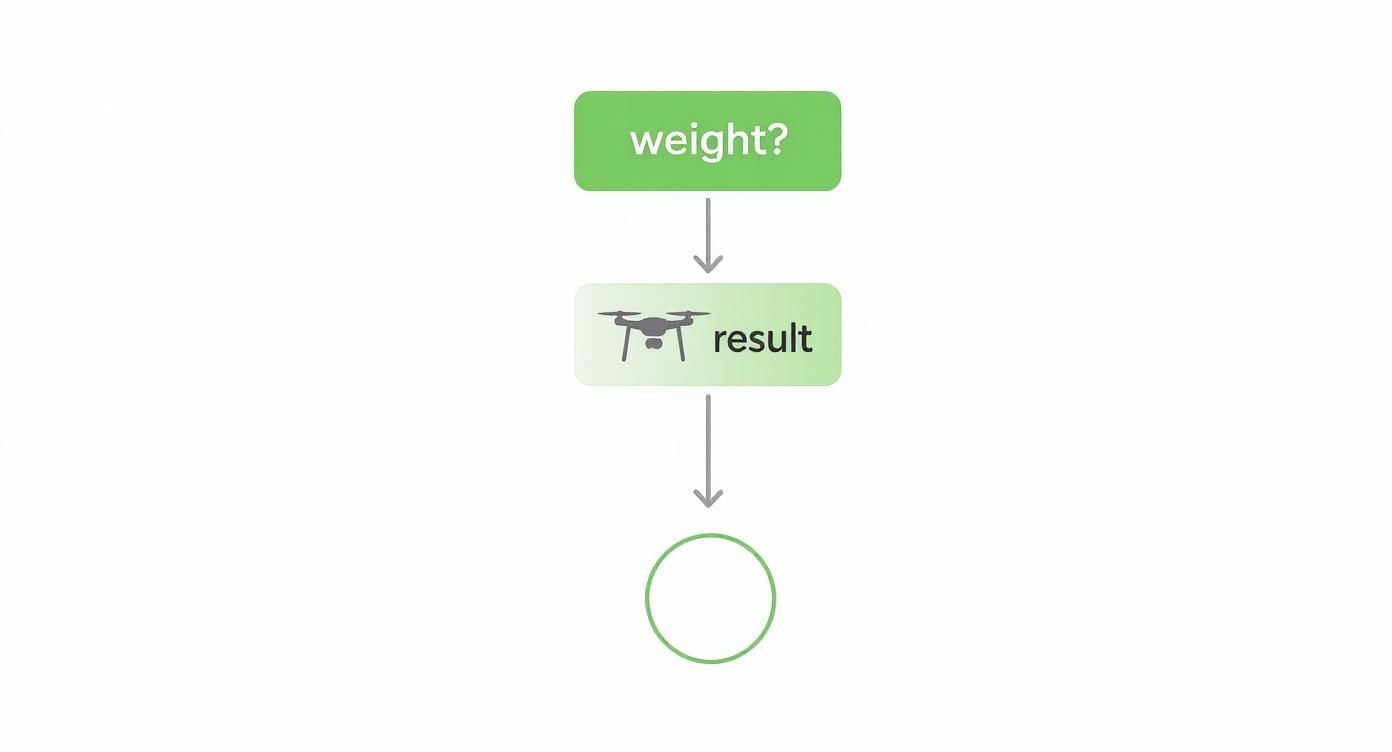
Choosing a drone under 250 grams is simply the smartest move to avoid unnecessary bureaucracy and get up in the air quickly.
Think of it like this: A lightweight drone is like an express pass at an amusement park. You get access to almost all the excitement but with fewer rules to keep track of, so you can focus on the fun – flying.
By starting simple, you build confidence at your own pace. Once you've mastered the basics, you can always upgrade to a more advanced model. For a deeper look at specific models, you can read our guide on best-in-test drones for different budgets.
Quick Comparison of Popular Beginner Drones
To give you an even clearer picture, we've put together a simple comparison of some popular models that are perfect for beginners. All of these weigh under the magic 250-gram limit.
| Model | Weight (grams) | Max Flight Time (minutes) | Video Quality | License Required |
|---|---|---|---|---|
| DJI Mini 2 SE | 246 | 31 | 2.7K | No |
| DJI Mini 4 Pro | 249 | 34 | 4K/60fps | No |
| Ryze Tello | 80 | 13 | 720p | No |
| Autel EVO Nano+ | 249 | 28 | 4K/30fps | No |
The table clearly shows that you can get excellent performance without needing a drone license. Models like the DJI Mini 4 Pro even offer features previously only found on significantly more expensive and heavier drones, making them fantastic choices to grow with.
The Tech That Keeps Your Drone in the Air – and Away From Trees
Modern drones are packed with smart technology that acts as your very own co-pilot. Think of it as an invisible safety net that makes flying both easier and much safer, especially when you're a beginner. Understanding how these systems work is key to feeling confident with the controls in your hand.
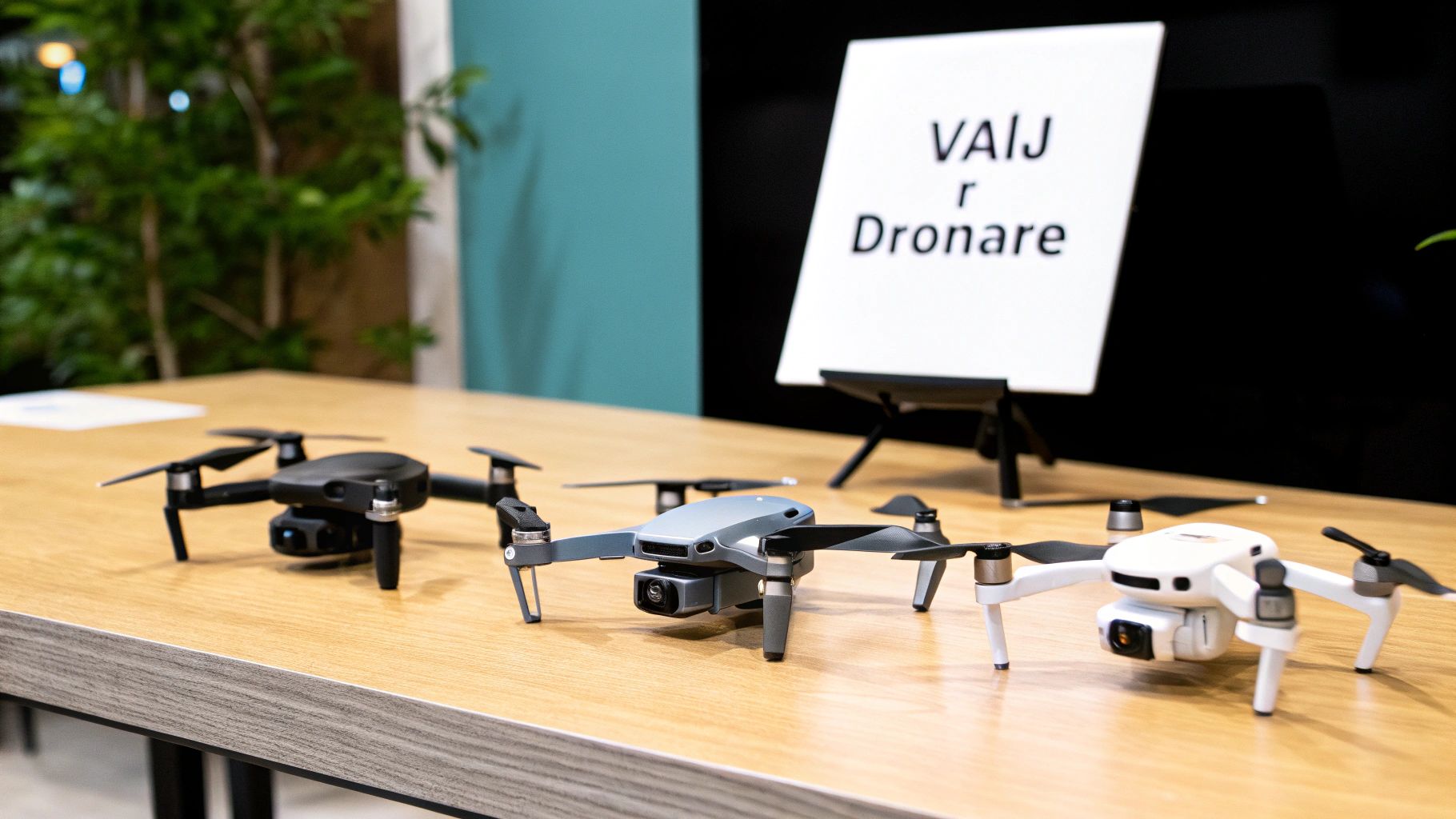
Have you seen a drone just hover, completely still in the air? It's not magic; it's the GPS (Global Positioning System) at work. The GPS acts as a digital anchor, locking the drone's position using satellites so it doesn't drift away with the wind.
This is also the foundation for one of the most important safety features: Return to Home (RTH). If the battery starts running low or if you lose the signal to the controller, the drone knows exactly where it took off from and can fly home on its own. A real lifesaver!
The Drone's Digital Eyes and Reflexes
GPS provides stability, but obstacle sensing is the drone's eyes and reflexes. The system uses sensors to scan the surroundings and detect everything from trees and walls to other unexpected objects in the flight path.
For a new pilot, this feature is invaluable. The drone can either warn you with sounds and lights or, on more advanced models, simply stop or fly around the obstacle on its own. The risk of a crash decreases dramatically, especially when practicing in more challenging environments.
A drone without obstacle sensing is like driving a car in the dark without headlights. You'll likely be fine in an open field, but as soon as obstacles appear, it quickly becomes risky. Sensors are your headlights illuminating the way.
With this technology backing you up, you can relax and focus more on taking great photos instead of worrying about flying into something.
Intelligent Flight Modes That Do the Work for You
In addition to pure safety tech, most modern drones also feature smart flight modes. These are pre-programmed maneuvers that let you create professional-looking video clips with just a few button presses.
Some of the most common modes you'll encounter are:
- Follow Me: The drone locks onto a subject (usually yourself) and follows automatically. Perfect for filming while cycling, running, or kayaking.
- Orbit/Point of Interest: Here you select an object, like a building or a tree, and the drone circles smoothly around it while keeping the camera pointed at the center. The result is a cinematic, sweeping shot.
- Waypoint: Map out a route by placing points on the map, and the drone will fly the path entirely on its own.
AI-driven "Follow Me" functions have exploded in popularity among Swedish beginners because they make it so easy to capture yourself in motion. In fact, drones with this type of AI control have increased their market share by around 40% in Sweden in recent years. If you want to know more, you can read about the best Follow Me drones right now at Swedron.se.
Fly Legally by Knowing the Swedish Drone Rules
Taking off with a drone for the first time is an amazing feeling, but freedom comes with a certain responsibility. Knowing the Swedish drone rules is not just smart – it's a requirement to fly legally and safely.
As a beginner, there are primarily two golden rules you must always follow. They are the foundation of all safe drone flight in Sweden and are super easy to remember.
The first and perhaps most important rule is the maximum flight altitude. You must never, ever fly higher than 120 meters above the ground or water. This limit exists to keep drones at a safe distance from manned aircraft, such as helicopters and light planes.
The second main rule is that you must always keep your drone within line of sight. This is often called VLOS (Visual Line of Sight) and simply means you should be able to see the drone with the naked eye at all times, without the help of binoculars. The purpose is to ensure you always have full control and can avoid unexpected obstacles.
Understanding Where You Cannot Fly
Some places are simply prohibited for flying, regardless of how low or carefully you fly. These are often called restricted areas or "no-fly zones." Knowing them is essential to avoid serious mistakes.
Some of the most common restricted areas include:
- Airports: Here you must maintain a significant safety distance, usually at least five kilometers, to avoid interfering with air traffic.
- Prisons and Nuclear Power Plants: These are "protected objects" where drone flight is strictly prohibited for obvious security reasons.
- Certain Nature Reserves: To protect sensitive wildlife, especially during breeding seasons, there is often a total flight ban over national parks and nature reserves.
Before you even think about taking off, make it a habit to always check a drone map, such as the one from the Swedish Civil Aviation Administration (Luftfartsverket). There you'll see immediately if your planned flight area is free from restrictions.
Flying in a restricted area is not just a mistake; it's a law violation. It can lead to heavy fines and, in the worst case, the confiscation of your equipment. A quick check of the map only takes a minute and is the best insurance against trouble.
Respecting People's Privacy
In addition to flight rules, you must also consider the rules regarding photography and filming, especially when it involves other people. This is where the General Data Protection Regulation (GDPR) comes in, setting limits on what you can do.
The main rule is simple: you cannot film people in a way that violates their personal privacy without their consent. Hovering with the camera over a neighbor's yard is a typical gray area that can easily lead to conflict. Feel free to read our detailed guide on what applies when flying drones over someone else's property to get a full handle on the situation.
The drone hobby has truly exploded in Sweden, with over 100,000 registered drones in recent years, and beginners make up a large portion of that figure. The market is driven by versatile models under 250 grams, making it easy to get started, but remember – the responsibility to follow the rules applies to everyone, regardless of the drone's size.
Time for Your Maiden Voyage – Your Guide to a Successful First Flight
Now we've reached the most exciting part. The drone is unpacked, the batteries are fully charged, and you're ready to finally see the world from above. Consider this your personal checklist to ensure your very first flight is just as awesome and safe as you've imagined.
Preparing correctly is key. Think like a real pilot going through their pre-flight checklist – it only takes a few minutes but makes an enormous difference for both safety and your own peace of mind.
Pre-Flight Checklist
Before you even think about pressing the start button, take a minute to go through these simple steps. It helps you build good habits from day one and minimizes the risk of unpleasant surprises.
- Charge Everything to the Max: Ensure both the drone's battery and the remote controller are 100% charged. The last thing you want to see mid-flight is an unexpected low battery warning.
- Check the Propellers: Take a quick look to make sure the propellers are intact and properly secured. Even a tiny crack can disrupt flight.
- Choose a Good Location: Find a large, open field without obstacles like trees, buildings, or power lines. The more space you have, the more you can relax and focus on flying.
- Calibrate the Compass: Every time you fly in a new location, follow the instructions in the app to calibrate the drone's compass. This step is crucial for the GPS to work perfectly and provide a stable flight.
By ticking off this list, you ensure both you and your drone are ready for a fantastic experience.
Skipping calibration is a bit like heading out on a hike without knowing which way is north. It might work for a while, but you risk the drone becoming confused and behaving strangely. Take that extra minute – it's always worth it.
Get to Know the Controls
The remote controller might look a bit advanced with its two sticks, but it's actually very logical. A good way to think about it is that the left stick controls "altitude and rotation," while the right stick controls "direction."
- Left Stick (Up/Down): This is the throttle. Push the stick up to take off and climb, push it down to descend and land.
- Left Stick (Left/Right): Spins the drone on the spot, as if it's rotating around its own axis.
- Right Stick (Up/Down): Flies the drone straight forward or backward.
- Right Stick (Left/Right): Flies the drone sideways, either to the left or right.
Start with small, gentle movements. The drone reacts immediately, so avoid jerky movements with the sticks.
Your First In-Air Exercises
Once you're up, the goal is to build muscle memory and confidence. Instead of just flying around aimlessly, try these basic exercises to really become one with the controls.
Start by just hovering at a low and safe height, maybe two to three meters above the ground. Once you feel stable, try gently flying in a simple square. Fly forward, stop, fly right, stop, fly backward, stop, and then left to return to where you started.
Feeling good? Then it's time to try a figure eight. This exercise combines all the controls and is a superb way to learn smooth, coordinated turns. Remember to take it slow and focus on precision, not speed.
Congratulations – you are now officially a drone pilot!
Avoid Common Beginner Mistakes
Everyone who has flown a drone has made a mistake at some point. It's just part of the journey. But by learning from others' experiences, you can skip the most common pitfalls and become a safer pilot much faster.

A classic error many people make is underestimating the weather, especially the wind. A light beginner drone is incredibly sensitive to gusts. What feels like a calm breeze on the ground can be a significant wind 50 meters up in the air, strong enough to sweep the drone out of your control.
A good rule of thumb is simple: if you see a tree's smaller branches swaying noticeably, it's probably too windy to fly a lightweight drone safely.
Respect the Battery and Your Line of Sight
Another common and quite risky mistake is ignoring the drone's low battery warnings. I know, the thought "just one more minute" is tempting. But pushing the battery to the last percentage point can end with an uncontrolled landing—in the worst case, right into a lake or somewhere you can't reach.
When your drone warns of low battery, start landing immediately. This is crucial for maintaining control and ensuring your drone gets home in one piece.
Finally, sure it's tempting to peek at what's behind the next hill? But flying the drone out of sight is one of the most serious mistakes you can make.
Flying beyond your line of sight (BVLOS – Beyond Visual Line of Sight) is not only directly illegal under Swedish rules, it is also extremely dangerous. You lose all ability to see and avoid obstacles like trees, buildings, or other aircraft.
By keeping an eye on these three common traps, you lay a solid foundation for your development as a pilot. You're not just protecting your investment, but also everything and everyone around you.
A thoughtful and cautious approach is key to making drone flying a safe and long-lasting hobby. Create good habits from the start, and you'll become a more skilled and responsible pilot in the long run.
Take Care of Your Drone for a Longer Life
Just like any gear you care about, your drone benefits from a little love and attention. After all, it's an investment that deserves to perform at its best and last a long time. By establishing a few simple care habits, you not only ensure it has a longer life but also that every flight is as safe as possible.
The absolute most important thing to keep track of is the batteries—think of them as the drone's heart. If you know you won't be flying for a while, store them half-charged (approx. 40–60%). Also, avoid leaving them in a scorching car or out in freezing temperatures, as extreme temperatures can damage them permanently.
Regular Quick Checks
Make it a habit to give the drone a quick look before taking off. Focus on the propellers. Are you looking for small cracks, nicks, or other blemishes? Even a tiny bit of damage can actually disrupt the balance in the air and, in the worst case, lead to a crash. See something? Replace it immediately. A new propeller is cheap insurance.
Also, glance at the sensors and camera lens. Keep them free of dust and fingerprints with a soft microfiber cloth. Clean sensors are absolutely crucial for smart features like obstacle sensing to work correctly.
Flying with dirty sensors is a bit like driving a car with a muddy windshield. You lose some of the safety that the technology is built to provide. Regular cleaning ensures your digital co-pilot sees clearly.
Finally, don't forget the software, or firmware as it's also called. See manufacturer updates as a free service that often provides better performance, new features, and fixes important security vulnerabilities.
By keeping the drone updated and clean, and by always taking off from a clear surface using a drone landing pad, you give it the best possible conditions for a long and trouble-free life in the air.
Common Questions When Starting to Fly Drones
Entering the world of drones is incredibly fun, but it's completely natural to have a lot of questions at first. To make your start as smooth as possible, we've gathered answers to the most common queries new pilots encounter.
One of the very first questions is, of course: "Which drone should I buy?". For someone completely new, the answer is almost always a drone for beginners that weighs under 250 grams. Models like those in the DJI Mini series are perfect examples.
The advantage of this weight class is that you avoid the requirement of a drone operator license in Sweden. These drones are not just light; they're also packed with smart tech like GPS and automatic return-to-home. This makes them a perfect and worry-free starting point.
What About Insurance and Flight Altitude?
Another common concern is insurance. For hobby flying with a lighter drone, there is no legal requirement, but it is strongly recommended. An accident can quickly become an expensive affair if something goes wrong.
Start by checking your home insurance—often it includes some liability coverage. However, read the fine print carefully, as there may be exceptions specifically for drones. For heavier models or commercial flight, the rules are always stricter.
The Swedish Transport Agency's two golden rules are easy to remember: fly a maximum of 120 meters above the ground and always keep the drone within line of sight. This means you should be able to see it with the naked eye, without binoculars.
The fact that your drone has a technical range of several kilometers doesn't matter if you lose sight of it. The rule is there for your safety and the safety of others. Want to dive deeper into the subject? Then we recommend our comprehensive guide on drones, where we cover everything from A to Z.
What if I Lose Contact With the Drone?
This is a completely understandable concern for all new pilots. Luckily, almost all modern drones have a built-in lifeline for just this: Return to Home (RTH).
If the signal between the remote controller and the drone is broken, it will automatically climb to a safe altitude, turn around, and fly back to its takeoff point. Once there, it lands softly and safely on its own. Smart, right?
At ActionKing, you'll find everything you need to get started and evolve as a drone pilot, from the best beginner models to propellers, filters, and bags. Discover our wide range of drone accessories at https://actionking.se.


